Not-so-Quiet Qatar
- Adam Rogers
- Jan 28
- 11 min read

Updated: Feb 21
On this—my tenth visit to Qatar—I found myself thinking about how easy it is to misunderstand a place if you only skim its surface. Many visitors fly in, stay in Doha, and leave believing they’ve “done” the country. It’s a bit like visiting Paris for a long weekend and claiming to know France. Doha is remarkable—bold architecture, cultural ambition, an ever-shifting calendar of events—but Qatar is far more than its capital. You need to be willing to drive a little, linger a little, and look past the obvious.

Mina District and Souq Waqif
One of Doha’s most quietly enchanting neighborhoods is the Mina District, and it’s a place I return to almost reflexively. Set along the marina, the area feels meticulously—but not coldly—designed. Rows of pastel-colored buildings in soft pinks, blues, yellows, and greens give it a calm, almost Mediterranean rhythm, as if someone had transplanted a seaside town from southern Europe and gently adjusted itfor the Gulf.
It’s wonderfully walkable: clean, relaxed, and unhurried, with cafés and small restaurants that invite you to sit rather than rush. As the sun drops, the marina comes alive in reflections, and the whole district turns into a photographer’s playground. But it’s not just visually pleasing—it’s humane. Mina feels like a place designed for people to enjoy space, light, and water, rather than merely passing through.
If I had to name a favorite spot here, it would be Chabrat Al Mina—the district’s fish market restaurant and, quite simply, one of the best dining experiences I’ve had in Doha. Phenomenally incredible would not be an overstatement. You select your own seafood—fresh from the day’s catch—and have it cooked exactly to your specifications, whether grilled, fried, or prepared with regional flair. The appetizers alone could justify the visit: an impressive lineup of beautifully prepared, intensely flavorful small plates. Add to that excellent service and an energetic, convivial vibe, and it becomes the kind of place you plan an evening around rather than stumble into by chance.

A short drive away—and in many ways its philosophical opposite—is Souq Waqif, Doha’s historic heart and one of the city’s most compelling public spaces. Where Mina is airy and pastel, Souq Waqif is dense, textured, and alive with sound and scent. Narrow alleys wind between low, sand-colored buildings reconstructed with traditional materials, giving the souq a sense of age and continuity—even if some parts are carefully restored rather than ancient.
The souq is at its best in the evening, when the heat eases, and the place fills with families, visitors, and locals lingering over tea or dinner. Vendors sell spices, textiles, perfumes, falcons, and everyday household goods, while restaurants spill into courtyards and alleyways. I often settle into one of the cafés for a shisha, letting the evening stretch out unhurriedly as conversations drift past and the place's rhythm asserts itself. It’s chaotic at times, but comfortably so—a lived-in chaos that feels authentic rather than staged.

What I appreciate most about Souq Waqif is that it isn’t frozen in time. It functions as a social space first and a tourist attraction second. You see children playing, men debating politics over coffee, musicians performing, and shopkeepers who clearly know their regulars. It’s one of the few places in Doha where you can sit, observe, and feel the city breathing around you.
Taken together, Mina District and Souq Waqif capture something essential about Qatar today. One looks outward, projecting an image of modernity, design, and openness to the world. The other looks inward, grounding the city in memory, habit, and tradition. Moving between the two—sometimes in the same evening—you get a fuller, more nuanced sense of Doha than either could offer on its own.
National Museum of Qatar

If there’s one place I never skip in Doha, it’s the National Museum of Qatar. Even after multiple visits, the building still stops me in my tracks. Inspired by the desert rose and designed by Jean Nouvel, its interlocking discs rise from the ground like a geological event frozen in time. It’s sculpture as architecture—and architecture as storytelling.
Inside, the museum traces Qatar’s journey from its geological origins through pearling, tribal life, oil, gas, and rapid modernization. The historical record may be relatively short and, at times, generously amplified, but what the museum achieves through multimedia is simply unmatched. The immersive video installations—some running seamlessly across walls and ceilings—are among the most creative I’ve seen anywhere on Earth. I could sit in certain galleries for days, letting the imagery wash over me.
The experience is calm and unforced. You’re not herded; you’re invited. Visiting at night is especially memorable when the exterior lighting gives the structure a soft, almost ethereal glow. Excellent staff, smooth logistics, and easy parking make it not just a museum visit, but a genuinely contemplative cultural experience.
Museum of Islamic Art

Rising from its own island, the Museum of Islamic Art feels timeless and self-contained, as if deliberately insulated from the city’s pace. Designed by I. M. Pei late in his career, the building is a masterclass in restraint and geometry. During one visit, a special exhibition on Pei himself added welcome depth, including insight into his insistence that the museum be placed on the water to preserve its visual integrity as Doha expanded.
Inside, the space unfolds slowly—clean lines, carefully controlled light, and galleries that guide you gently through centuries of Islamic civilization. It’s darker than many museums, and decidedly adult in tone; this is a place to move slowly, not one to rush through with restless children. The reward is in the details: calligraphy, ceramics, metalwork, and architectural fragments that speak across time.
A practical note: the QAR 70 museum pass is absolutely worth it. It grants access to several major museums, including MIA and the National Museum of Qatar—both of which benefit from repeat visits rather than a single rushed stop.
Al Zubarah Archaeological Site

North of Doha lies the Al Zubarah Archaeological Site, a UNESCO World Heritage Site that offers a glimpse into Qatar’s pre-oil past. The 20th-century fort—its most prominent feature—sits solidly against the desert, with thick walls built to repel invaders and temper the heat.
From the fort, you look out over the remains of a once-thriving pearling and trading town that played a role in the region’s 18th-century power struggles. Today, the fort houses a small museum with artifacts from the pearl-diving era, while scattered across the site are the outlines of homes, mosques, streets, and defensive walls.
It’s not especially dramatic, and it won’t overwhelm you visually. But I appreciated it for what it is: a sincere attempt to preserve—and narrate—a fragile history in a country where modernity has arrived at extraordinary speed.
Al Jassasiya Rock Art Site
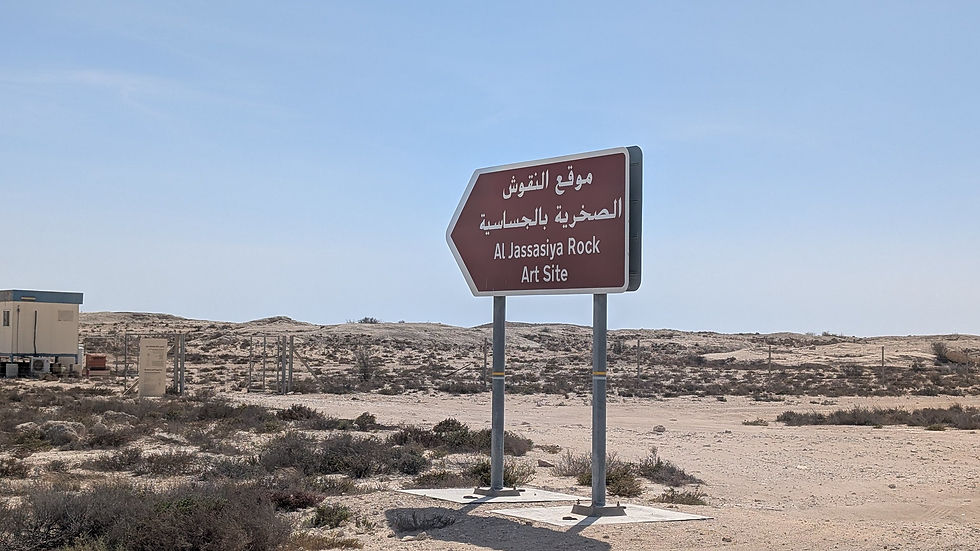
Tucked away in the north-east of the country, the Al Jassasiya Rock Art Site is one of Qatar’s most intriguing—and least visited—heritage sites. At first glance, it looks unremarkable: a low, windswept stretch of sandstone that could easily be mistaken for an abandoned quarry. But once you start looking closely, the landscape begins to speak.
Al Jassasiya is the most impressive of Qatar’s dozen known rock-carving sites, containing an extraordinary 874 carvings, or petroglyphs, some of which are believed to date back to Neolithic times. Discovered around 1957, the carvings are spread across a rocky desertscape roughly 700 meters wide, creating a quiet but deeply atmospheric open-air archive.
The imagery is varied and often enigmatic. Rosettes, fish, ostriches, cup marks, and geometric patterns are etched into the stone, alongside carvings of dhow boats—still in use today—which provide a direct, tangible link to Qatar’s maritime past. The cup marks are particularly fascinating. Some scholars believe they were used as vessels for storing pearls; others suggest they may have been part of ancient board games known as Al Haloosa or Al Huwaila. No one knows for sure, and that ambiguity is part of the site’s power.

Unlike formal museums, Al Jassasiya offers no explanatory panels, no glass cases, no choreography. You walk among the carvings essentially alone, free to interpret, imagine, and wonder. It’s a rare experience in a country better known for polished cultural institutions and ambitious architectural statements—a reminder that Qatar’s story did not begin with oil, gas, or even pearling, but much earlier, scratched quietly into stone.
How to get there: Al Jassasiya lies about 60 kilometers north of Doha and is easily reached by car. Drive north on Al Shamal Highway and take Exit 66. Turn right, then continue to the next intersection, where you turn left. After roughly three kilometers, you’ll see a large fenced area marking the site. From there, you park and walk in. There’s little signage and no shade, so go early, bring water, and give yourself time to slow down—the carvings reveal themselves gradually.
The Palace and the Changing of the Guard
One of Doha’s quieter rituals unfolds not in a museum or market, but in front of the Amiri Diwan, the seat of Qatar’s leadership, set just off Souq Waqif. It’s an easy walk from the souq, and yet the atmosphere shifts almost immediately—from social bustle to ceremonial calm.
At certain times of day, visitors can watch the changing of the guard, a formal and meticulously choreographed affair made distinctly Qatari by the presence of camels. Tall, stately, and improbably elegant, they move with slow confidence across the palace grounds, accompanied by mounted guards in traditional dress. It’s a scene that feels lifted from another era, yet unfolds against the backdrop of a modern capital city.
There’s no grandstand, no narration, no effort to turn it into a spectacle for tourists. People gather casually—locals, families, curious visitors—standing quietly, phones lowered more often than raised. The ceremony is dignified rather than showy, rooted in continuity and symbolism rather than performance.
What struck me most was how unforced it all felt. The camels are not there for novelty; they are part of a living tradition, a reminder of the deep desert heritage that still underpins the country’s identity. Watching the guards change beneath the palace walls, with Souq Waqif just behind you and Doha’s skyline not far beyond, you sense how Qatar holds its timelines simultaneously—past, present, and future sharing the same space without apology.
It’s a small moment, easily missed, but one that lingers. Like much of Qatar, it rewards those who slow down long enough to notice.
Hilton Salwa Beach Resort & Villas

At the opposite end of the experiential spectrum sits the Hilton Salwa Beach Resort & Villas, a vast, gleaming resort near the Saudi border. Complete with its own water and adventure park, private beaches, spa, and an array of restaurants, it’s clearly designed to impress—and it does.
I tend to think of Salwa less as a hotel and more as a destination in its own right. It’s ideal for a day pass, and the drive down is part of the charm: long desert stretches, the occasional camel balanced improbably in the back of a pickup truck, and then suddenly, wide open beaches perfect for long, meditative walks. There are several good restaurants at the resort, and an excellent gym for working out.
Fuwairit Kite Beach, Tapestry Collection by Hilton
And then there’s Fuwairit Kite Beach, Tapestry Collection by Hilton—a place I keep returning to, again and again. Located about an hour north of Doha, near the coastal village of Fuwayrit in the Ash Shamal municipality, it feels wonderfully removed from the city. Archaeological evidence suggests the area may have been settled as early as the 16th century, though today its draw is elemental rather than historical.
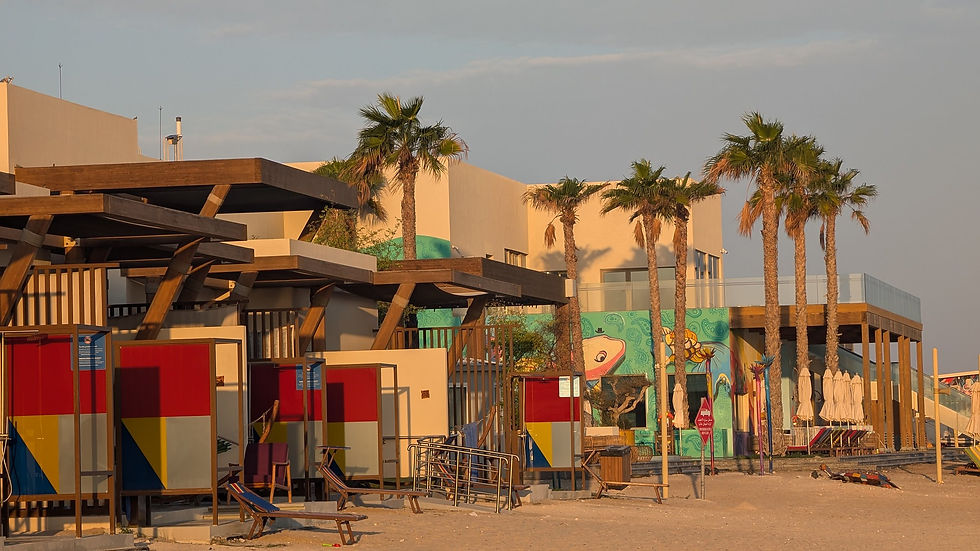
The rooms open directly onto the beach; lying in bed, you can see the sea past your toes. Hammocks sway outside. By day, kite surfers carve the sky and water in a constant, mesmerizing ballet. Breakfast is lavish without being gaudy, service is genuinely warm, and the gym—huge and beautifully equipped—looks out over the beach, making even a workout feel indulgent.
It’s the personal touches that keep me loyal. On my third return visit, a staff member named Jamlick from Kenya left a handmade “welcome back” sign on my bed—moments like that matter.

Fuwairit Beach and the Hawksbill Nesting Grounds
There is another side to the Fuwairit Kite Beach Hilton—one that makes the place feel not just beautiful, but consequential. Beyond the lagoon and across the sandbar lies Fuwairit Beach, one of Qatar’s most important nesting grounds for hawksbill sea turtles, a critically endangered species. This stretch of coastline isn’t a sanctuary in the traditional sense—there are no gates or visitor centers—but it is officially recognized and protected as a vital breeding area, monitored seasonally by environmental authorities.

Each year, typically between April and July, female hawksbills come ashore under cover of darkness to lay their eggs in the soft dunes. It’s one of the few places in the Gulf where they still do so reliably, thanks to relatively low development, open beaches, and calmer coastal waters. In ecological terms, Fuwairit is the sanctuary.
Yet this paradise has a flaw, and it’s one I can’t ignore. Over several visits, I noticed increasing amounts of plastic waste accumulating on the outer beach across the lagoon—bottles, fishing nets, bags. The contrast is jarring: pristine water, nesting turtles, and then the unmistakable debris of human carelessness. For a species already fighting for survival, plastic poses a very real threat—through entanglement, ingestion, and obstruction of nesting paths.
During my most recent stay, I decided not to look away. I asked the hotel for large plastic bags and spent an entire day collecting rubbish along the outer beach, filling seven large bags in total. Using the tide, I floated them back across the lagoon, where hotel staff kindly helped dispose of them properly. Some of the bags were so heavy that they required two people to carry.
When I asked why the outer beach wasn’t cleaned regularly, I was told that staff were only authorized to maintain the area directly in front of the hotel. The rest, despite being the more beautiful and ecologically sensitive stretch, was off-limits. That response stayed with me.
After returning home, I wrote to Hilton management urging them to work with local authorities and environmental organizations to allow regular cleanups of the outer beach—especially during nesting season. The solution, I argued, doesn’t require grand gestures; it just involves coordination, permission, and consistency.
I ended my letter: “Qatar belongs to the Qatari people; the turtles belong to Mother Nature. But the responsibility to protect what’s fragile belongs to all of us.”
Travel often shows us beauty. Occasionally, it also hands us responsibility. At Fuwairit, the two are inseparable—and that, perhaps more than anything else, is what keeps drawing me back.


Climate Action Center of Excellence
Not all of my time in Qatar is spent wandering museums or beaches. I also come here to work. I’m part of the team at the Climate Action Center of Excellence, and I visit a few times a year in that role.

The Center is based at the Qatar Science and Technology Park, just across from the Convention Center—a fitting location at the intersection of research, policy, and ambition. It’s a place that reflects another side of Qatar, one that doesn’t always make it into glossy travel brochures: the country’s growing engagement with climate policy, innovation, and international cooperation.
The work itself is forward-looking and global in scope, focused on climate action, carbon markets, and helping countries navigate the complexities of the energy transition. What I appreciate most is the contrast. One moment you’re deep in technical discussions about frameworks and finance; the next, you step outside into carefully landscaped grounds, with Doha’s skyline shimmering in the distance.
For me, the Center anchors my visits to Qatar in something more than observation. It turns the country from a place I pass through into one I return to with purpose. Travel, at its best, isn’t just about seeing new places—it’s about understanding how they are trying to shape the future. In that sense, my work here has become part of how I experience Qatar itself.
Photos and text by Adam Rogers


Comments